


Welcome to the Where Tech Meets Bio newsletter, where we explore companies, technologies, and scientific breakthroughs shaping the biopharma industry's future!
If this newsletter is in your inbox, it’s because you subscribed, or someone thought you might enjoy it. In either case, you can subscribe directly by clicking this button:
In this issue: a retired chemist designs a renin inhibitor with ChatGPT and Gemini — Astromech raises at $3.8B and Forus at $3B while BioXcel files Chapter 11 — Google maps the largest connectome yet — Claude runs a protein design campaign — and a stablecoin issuer quietly publishes three BCI papers.
Main story
Chemical & Engineering News (C&EN) recently published an interesting case study on using off-the-shelf AI chatbots to assist in drug design work.
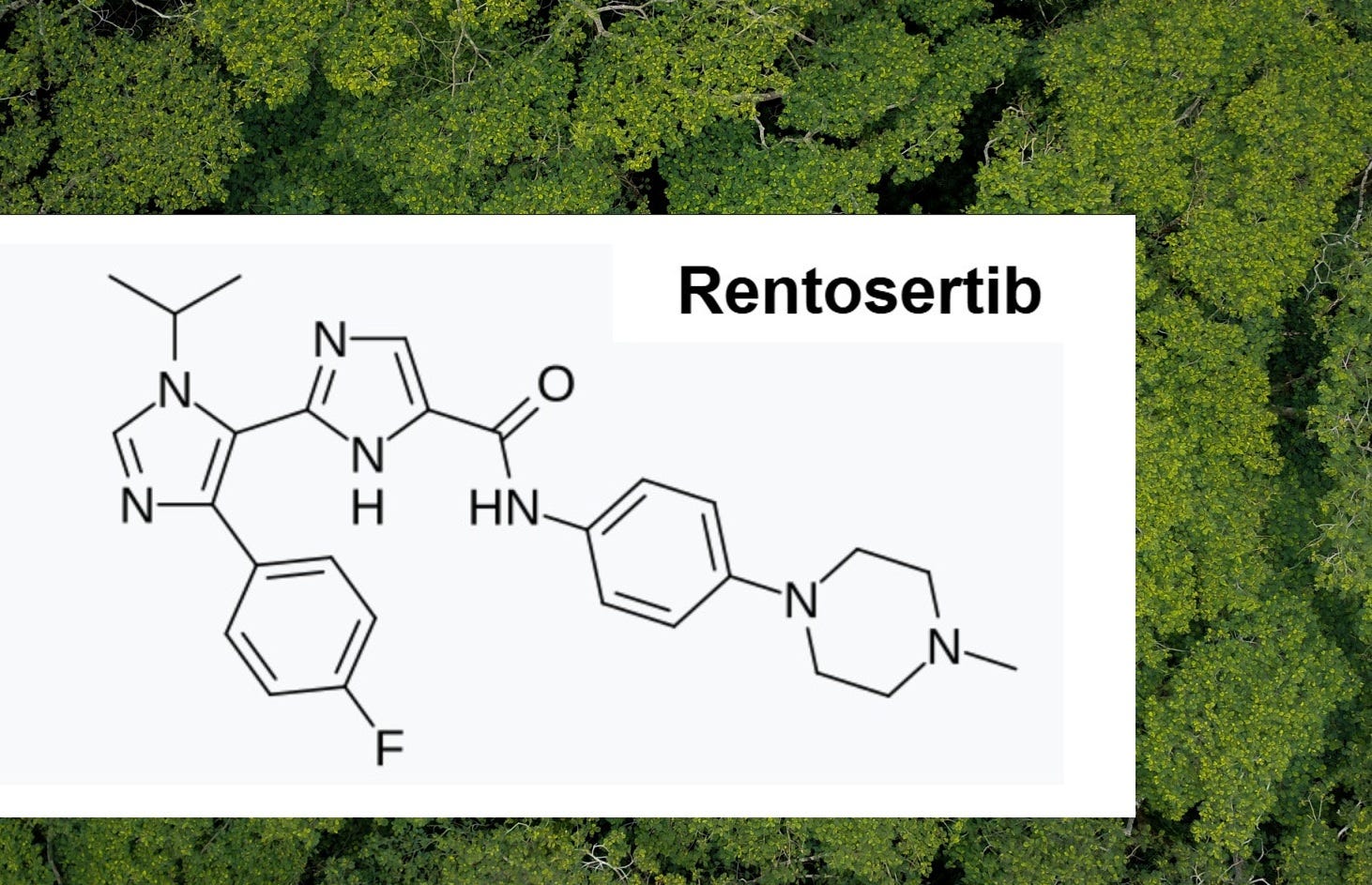
As Bethany Halford explains in her article, at ACS Fall 2026 in Chicago, Guibai Liang, a veteran medicinal chemist who co-founded Sheo Pharmaceuticals after retiring from big pharma, presented a talk in the Division of Medicinal Chemistry about how his team designed a novel renin inhibitor for hypertension using ChatGPT and Gemini, off the shelf, with no proprietary model in the loop.
Renin is about as picked-over as targets get: every major pharma ran a program, and aliskiren (Novartis’s Tekturna/Rasilez) is the only one the FDA ever approved — a mediocre drug, in Liang’s words, mostly on bioavailability.
Sheo took Takeda’s TAK-272 as a starting point and put what Liang calls “critical and revealing questions” to the chatbots: what does the hydrogen bond donor on the piperidine do, is the morpholine oxygen needed for activity, is metabolic stability a concern.
The models answered by synthesizing decades of published structure-activity relationship (SAR) insights — “it’s impossible for human chemists to remember all those data to come up with a clear picture,” Liang said for C&EN. From those answers, the team designed a new chemical class, had a CRO make 200 compounds across several iterations, and landed on SHEO-054, which reportedly outperformed aliskiren in a monkey model of hypertension.
Caveats: The structure wasn’t disclosed, only a general scaffold, and the data are self-reported from a conference talk, no paper yet. Also, “outperformed aliskiren” in one primate model is a long way from a development candidate.
The AI here read the literature no human could hold in working memory and handed back a coherent SAR picture, and Liang himself flags that renin may be a special case precisely because so much was published before the field walked away. The enabling condition is a dense, abandoned literature, which describes a surprisingly large share of pharma’s dead targets, and points at a strategy that doesn’t need a $100M platform to run.
Liang’s takeaway was blunt: “If you are not using AI in your medicinal chemistry, start now.”
Read “This company designed a drug candidate with help from ChatGPT and Gemini“ by Bethany Halford.
📅 I am excited to share that I’ll be a speaker at the upcoming TechBio Europe 2026 event in Paris, on November 30.
TechBio Europe 2026 brings Europe’s TechBio founders, investors, and pharma partners to Paris for one day on Nov 30 at Future4Care — financing, dealmaking, hiring at the bio/code intersection, plus a pitch contest for the continent’s newest startups.
TechBio Europe is organized by the TechBio Commission, co-led by WhiteLab Genomics and Scienta Lab, under the guidance of France Biotech, France Deeptech, Future4care, and proudly sponsored by In Extenso Innovation Croissance, ICOSA | European Intellectual Property Firm, BioLabs, McDermott Will & Schulte, BioTalent, and Wellcome Genome Campus.
TechBio Europe also kicks off Bioweek, a week of industry events in Paris.
Register for TechBio Europe and let’s meet: https://www.eventbrite.fr/e/techbio-europe-2026-tickets-1996434242562.
The Brief
🚀 New Launches
Geodesic Intelligence launched out of the gate with two products, NovaDDE and NovaAtom-Lite-Preview, pitching an AI-native platform for protein therapeutics and describing its aim as "AGI for drug discovery" — no funding, team, validation data or partners disclosed in the announcement.
💰 Follow the Money
Astromech, the Colossal Biosciences spinout founded by Ben Lamm and George Church, raised $20M led by Bob Nelsen (PEAK6, NeoGenesis, Builders VC and CAZ participating) at a company-reported $3.8B valuation ($60M total) to expand its genomic training datasets and model infrastructure for longevity work on evolutionary outliers like bowhead whales and Brandt's bats, though no externally validated performance, revenue or deployment data was disclosed.
Paul Allen's science fund is backing AI BioDesign, a Seattle effort, with ~$95M over five years — $46.1M to the Allen Institute, $43.8M to UW, $4.7M to Fred Hutch — for a loop where AI designs proteins and genetic switches that don't exist in nature, labs test them, and the results retrain the models.
BioXcel Therapeutics, the AI-driven neuroscience biotech behind the approved agitation drug Igalmi, filed for Chapter 11 with Teva as stalking-horse bidder at $57.5M upfront plus $67.5M in milestones — a cautionary marker for AI-derived pipelines
Forus raised a $150M Series C at a $3B valuation led by Bain Capital Ventures, taking total equity past $300M for its AI-agent network that cuts prior authorization from weeks to under 48 hours across physicians, pharmacies, payers and manufacturers.
🤝 Deals & Alliances
BenchSci and argenx partnered to apply BenchSci's agentic AI platform EMET to preclinical drug discovery, pitched by CEO Liran Belenzon and argenx's Tim Van Acker as an "always-on AI research partner."
Owkin licensed K Pro, its agentic "AI scientist," plus multimodal patient data from its MOSAIC network to Servier for oncology research.
Merck KGaA is paying PostEra "mid-double-digit millions" for its two fertility programs — oral small-molecule agonists of the FSH receptor and the LH/choriogonadotropin receptor that could replace the injection standard in IVF. Both are designed on PostEra's AI platform to solve the selectivity and half-life problems that sank earlier attempts, while PostEra keeps its PMOS program in-house with trials planned for early next year.
Ginkgo Bioworks won a subcontract worth up to $17.5M under ARPA-H's GIVE program, joining Waterfall Scientific on ESCALATOR — a multi-organization effort to compress end-to-end RNA drug manufacturing onto a benchtop footprint.
🔬 Science to Watch
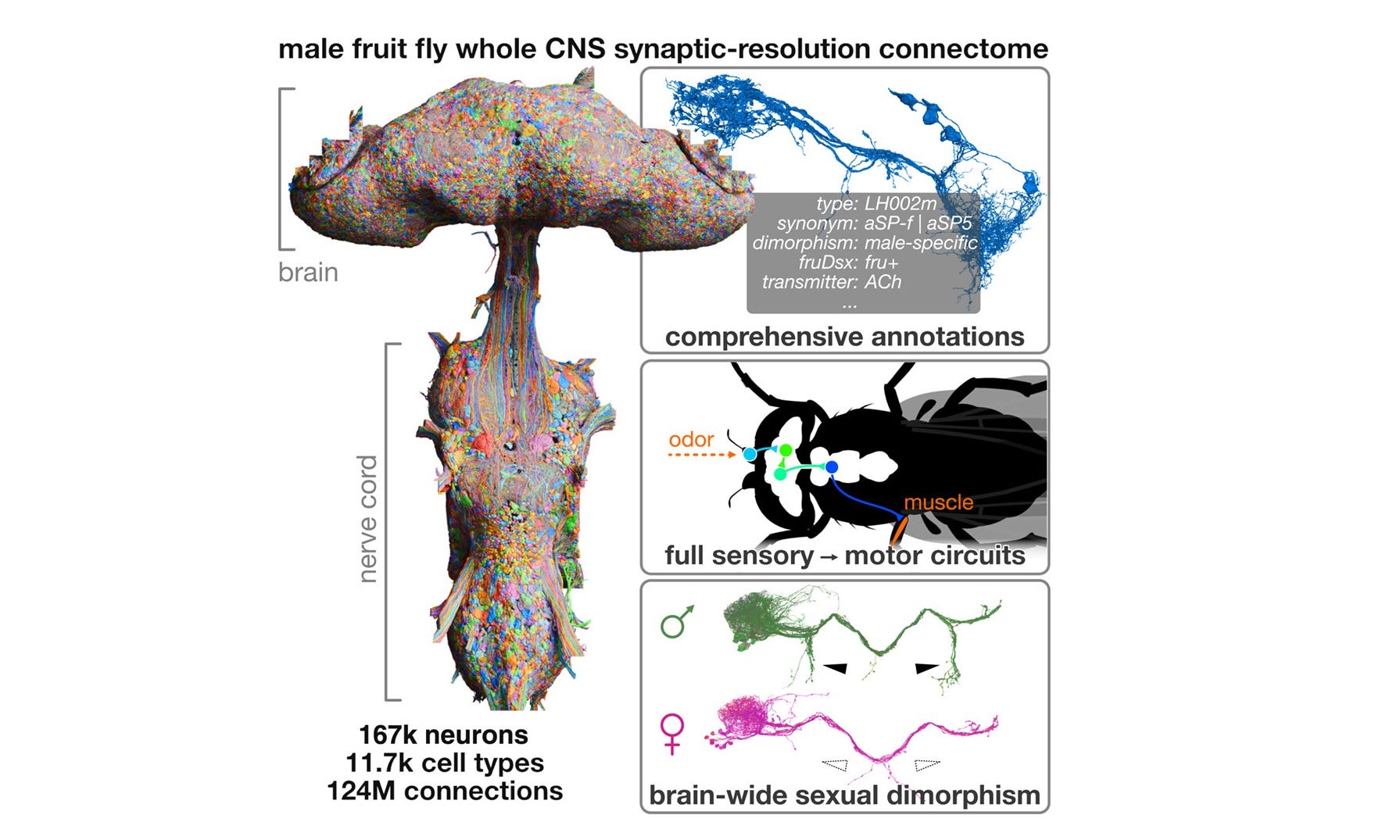
Google Research and HHMI Janelia published in Cell the complete AI-reconstructed wiring diagram of the male fruit fly's brain and nerve cord — 166,000 neurons and 125 million synapses.
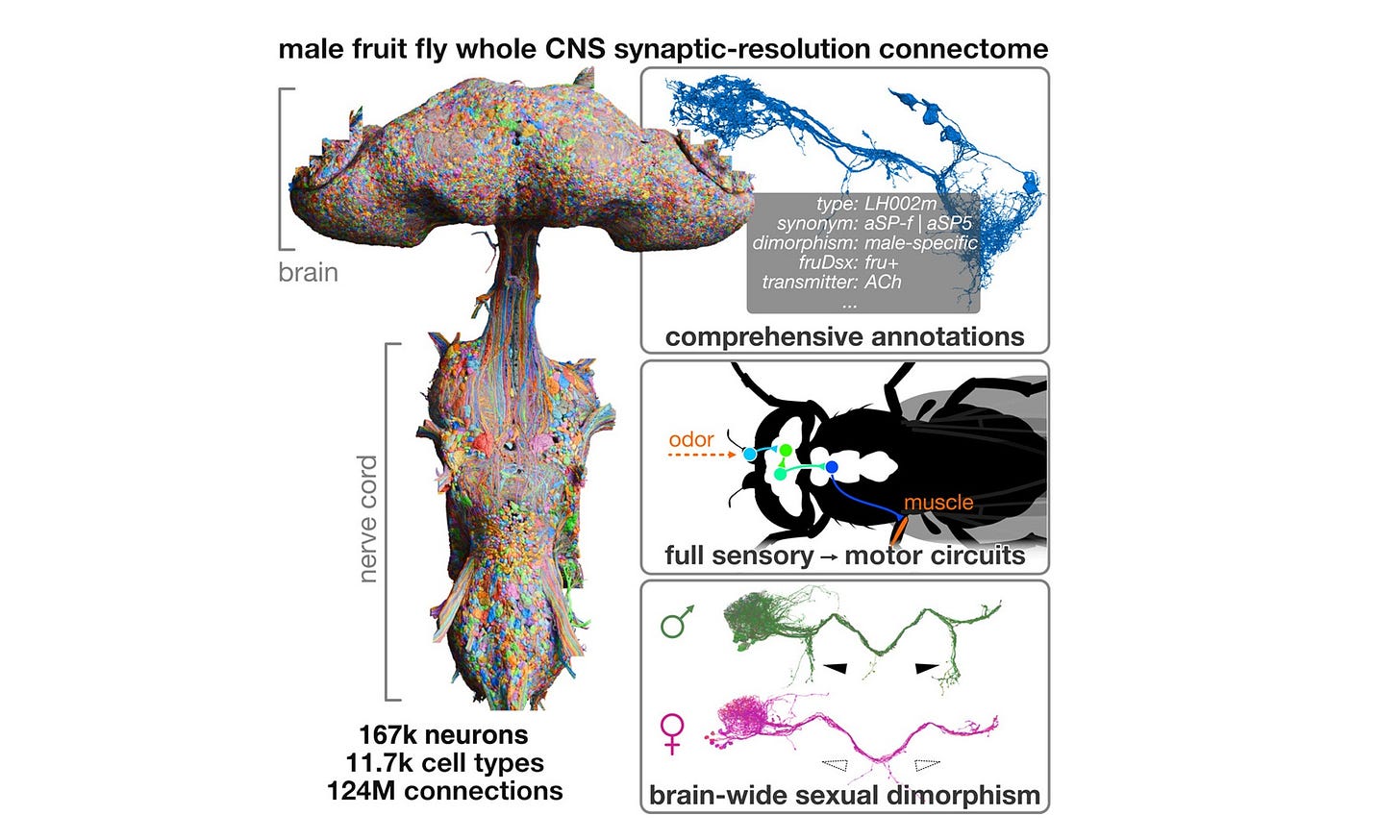
Image source: Berg S, Beckett I, Costa M Sexual dimorphism in the complete Drosophila male central nervous system connectome. Cell, 189, 5504-5526.e15 It is the largest connectome to date, which, paired with the existing female map, lets researchers compare the sexes neuron by neuron and sets up the methods for mapping zebrafish and mouse brains next.
AlphaGenome Atlas by Google DeepMind, scores all 9 billion possible mutations, coding and non-coding ones. They say that Gareth Hawkes, a Medical Research Council fellow at the University of Exeter, arguably found 22% more non-coding associations in the UK Biobank just by re-ranking with the Atlas.
Anthropic reports Claude, orchestrating existing open-source design tools rather than modeling proteins itself, produced 354 wet-lab-confirmed binders from 1,320 designs across 15 targets — a 22.6–35.1% hit rate against the 10–15% industry norm. Though the work is unreviewed, has no human-expert control arm, and the best-performing models stay access-restricted on biosecurity grounds.
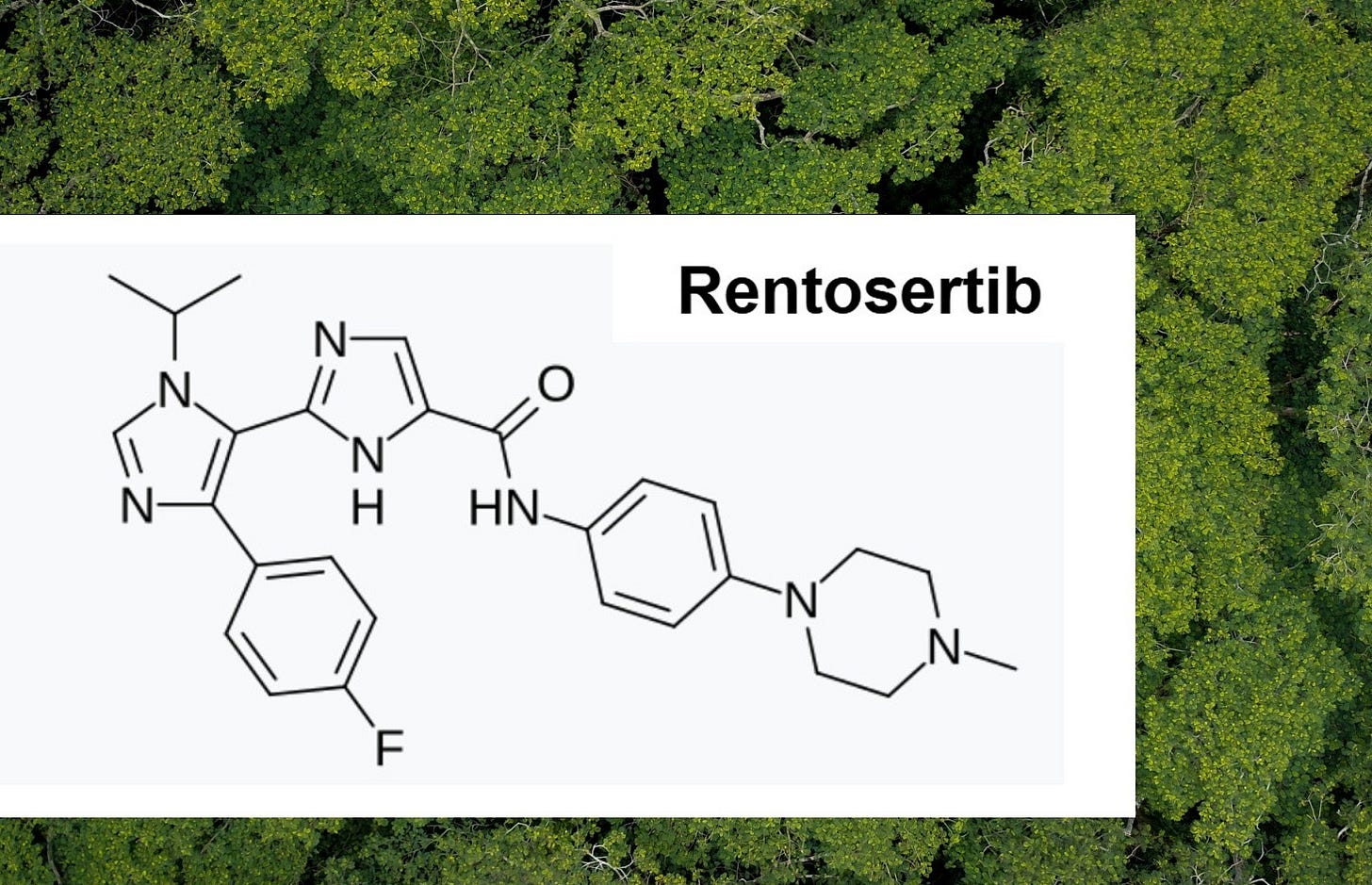
Insilico Medicine Doses First Patient in GENESIS-IPF-3, the World's First Phase III Trial of a Generative AI-Driven Innovative Drug
📋 From the Regulators
The FDA is putting sponsors on notice that it will refuse clinical data it cannot inspect or verify — with extra scrutiny on foreign Phase 1 and non-IND/IDE studies in countries where site access is denied or informed consent is questionable — and is expanding foreign inspections and publicizing where access was blocked.
💁♀️ People 💁
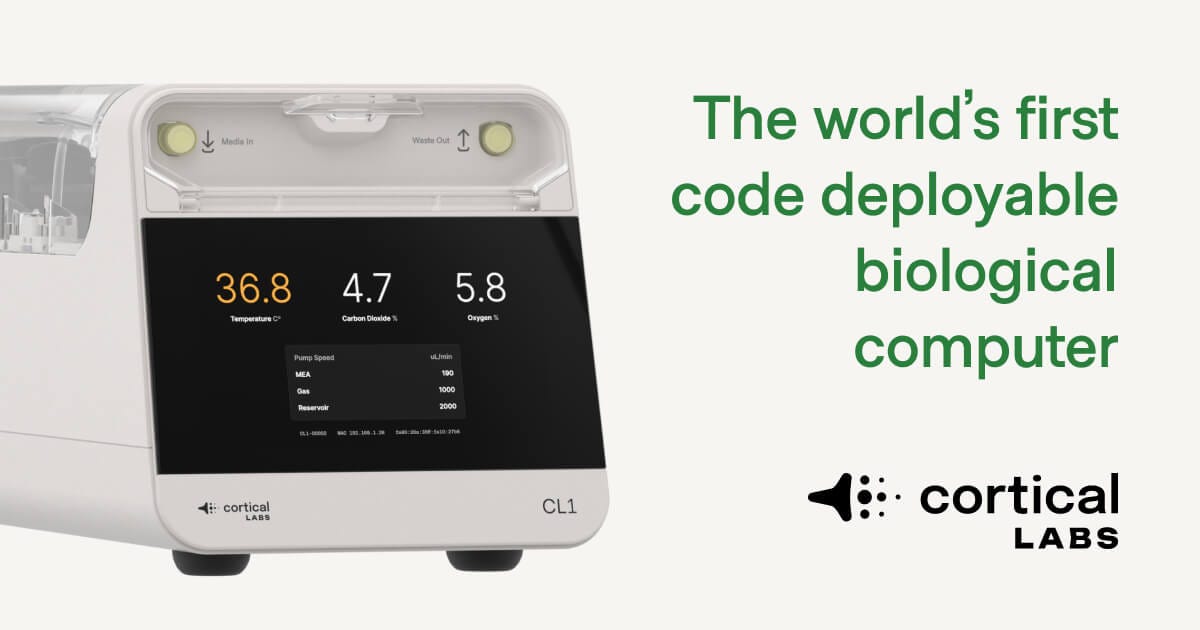
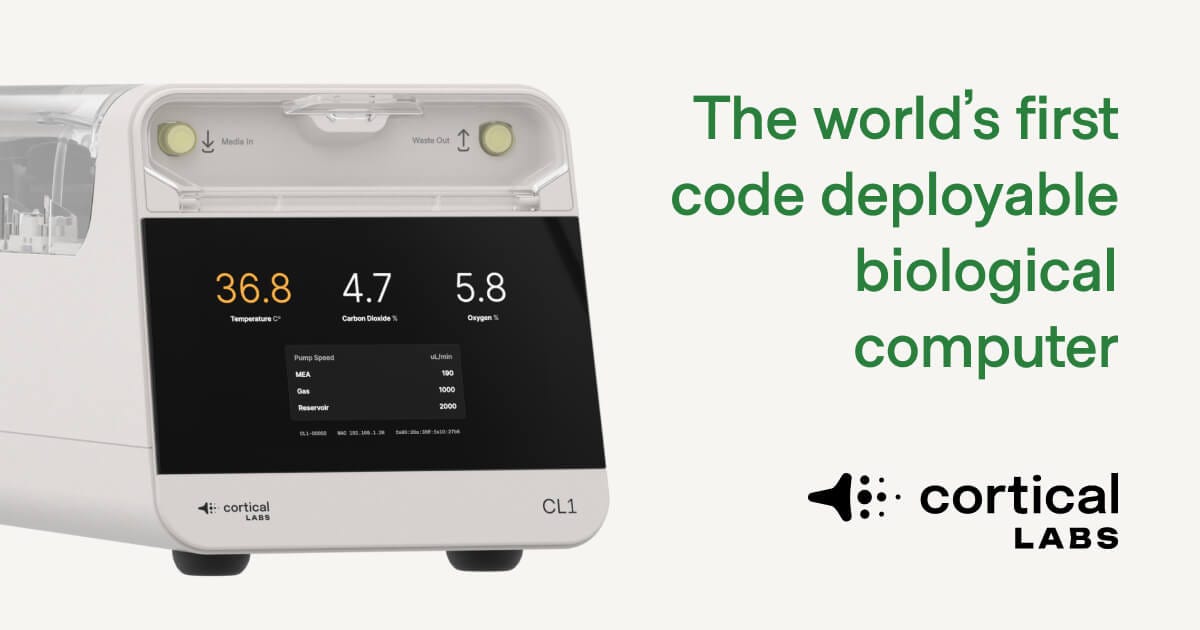
Hon Weng Chong, founder of Cortical Labs, the Melbourne company behind the DishBrain work and the CL1 biological computer, announced on LinkedIn that he has resigned after seven years, saying he's proud of what was built and no longer has access to his company email.
A Thing To Know This Week
Addressing one of the biggest challenges in brain-computer interfaces
Tether Evo, a frontier tech division of Tether, the stablecoin issuer, had three brain-computer interface (BCI) papers accepted at the Journal of Neural Engineering, Imaging Neuroscience, and Neural Networks, two of them with the University of Rome Tor Vergata.
All three attack the same bottleneck: every brain produces different signals, so decoders have historically been rebuilt from scratch for each patient, and the calibration burden is a real barrier to fielding these devices. The common move across the papers is an alignment step that maps different people’s neural data into a shared space, so one model can be trained across subjects and then fine-tuned for a new one.
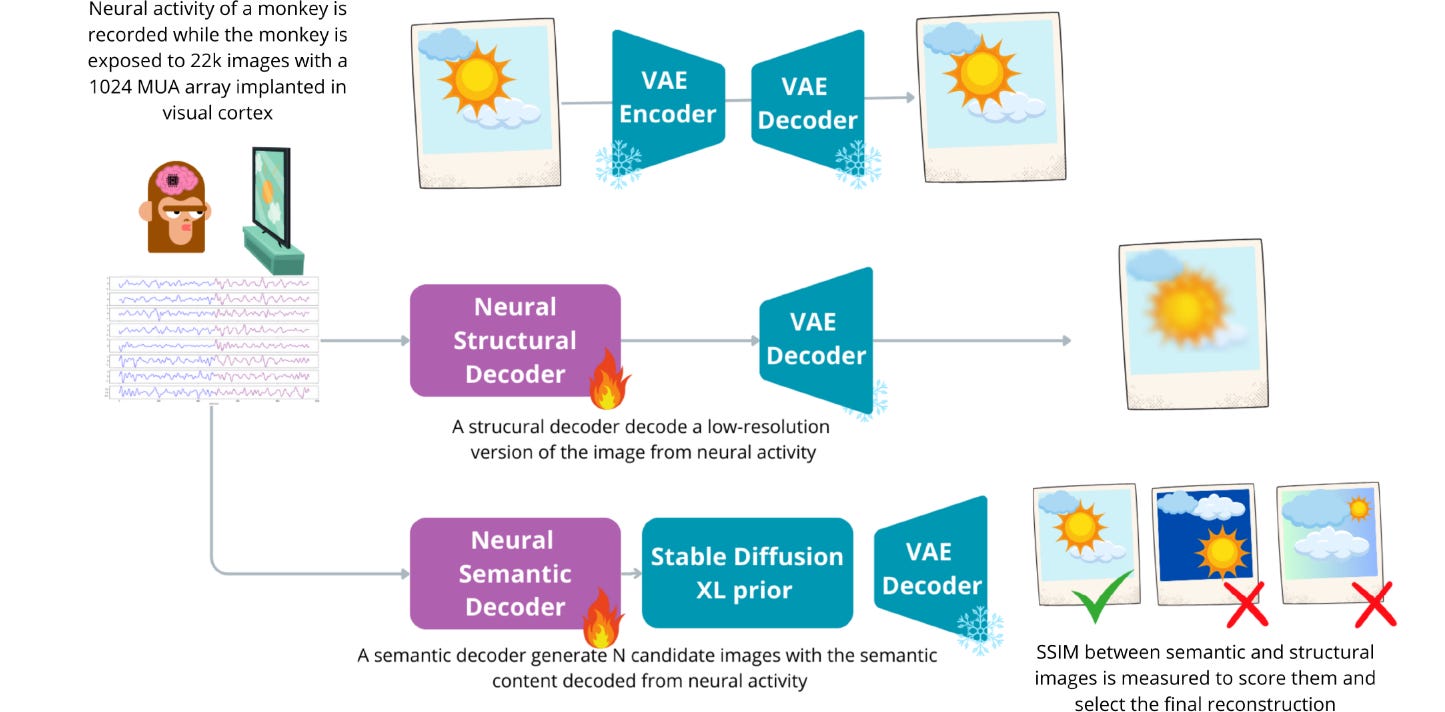
The speech paper (preprint on bioRxiv) deals with a cross-subject neural-to-phoneme decoder trained on invasive recordings from multiple participants implanted in different cortical regions, which is the hard version of the problem. Tether reports it matches or beats single-patient systems while adapting to a new person in minutes to hours rather than the usual long calibration, and describes it as the first of its kind. The vision paper reconstructs what macaques were looking at from 200 ms of spiking data, identifying the exact image out of thousands 70% of the time.
The music paper ran fMRI on five people hearing 540 songs across 10 genres, hitting 61% genre identification against 10% chance and ~25% song identification among 60 candidates against under 2% — classical and jazz the most distinctive, metal and disco the most confusable.
It is notable that Tether took a $200M majority stake in Blackrock Neurotech in April 2024, the company behind a large share of the world's chronic human intracortical implants.
Strategic Signals…
👉 AI labs are pivoting hard into health care to fix the notorious public perception trend. Anthropic is talking up biology ahead of its IPO, Nvidia and Lilly are building a $1B drug discovery lab, etc., partly because curing disease is a far better public story than data centers hogging power and driving up utility bills, and partly because life sciences diversify revenue as these companies head to public markets.
The catch is timing: real breakthroughs are years off, AI is making some health care more expensive, and biosecurity risk is real enough that Anthropic added safeguards to Claude Fable 5 after finding it could give a bad actor "significant uplift," so the goodwill is being spent well before the results arrive…
👉 AI-enabled drug repurposing is one of the most straightforward value propositions of the modern AI drug discovery movement. THPharm ran its Phase 3 metabolic drug THP-001 through Insilico Medicine’s PandaOmics (including 16 public datasets, 269 samples of post-treatment gene expression) to find new indications it might also treat, surfacing heart failure, fatty liver disease, and obesity as candidates.
The logic is capital efficiency: the drug already has human safety data, so each new indication starts with a big chunk of risk removed. Though these are computational hypotheses that still have to clear cell models, animals, and human trials.
👉 Aaron Blotnick argued on LinkedIn that OpenAI's integration of ChatGPT directly into Epic (the EHR holding records for 325M+ patients) just wiped out an entire startup category. Clinicians can now summarize labs, pull patient history, prep for visits and build clinical timelines without leaving the chart, plus a new plug-in pulling live data from ClinicalTrials.gov, CMS, RxNorm, DailyMed and PubMed. His conclusion: "If your startup's moat was 'AI + EHR integration,' it's time to find a new moat."
That was last week, and have a great one ahead!
Forward this to a colleague who should be tracking this space,
Cheers!
— Andrii and WTMB Team!
Read also:
What Do the New AI Model Releases by Anthropic and OpenAI Change for Life Sciences?
The Bigger Point Beyond Insilico’s Aging Research Milestone
Into the Dark: Finding Novel Drug Targets Within the Depths of Our Proteome