Welcome to the Where Tech Meets Bio newsletter, where we explore companies, technologies, and scientific breakthroughs shaping the biopharma industry's future!
If this newsletter is in your inbox, it’s because you subscribed, or someone thought you might enjoy it. In either case, you can subscribe directly by clicking this button:
Thanks for reading Where Tech Meets Bio! Subscribe for free to receive new posts and support my work.
In this issue: AI, geopolitics and FDA's animal-testing roadmap reshape pharma's R&D outsourcing — Boltz raises $110M and Xlue lands a $35M seed for cancer-risk prediction — Merck joins Isomorphic's partner list while Noetik gets MSK data for cancer world models — US biotechs go quiet for fear of Chinese fast followers — Benchling bets on companies' own lab history, Novartis' CEO offers a slower AI timeline, and GSK calls Anthropic a competitor, and more…
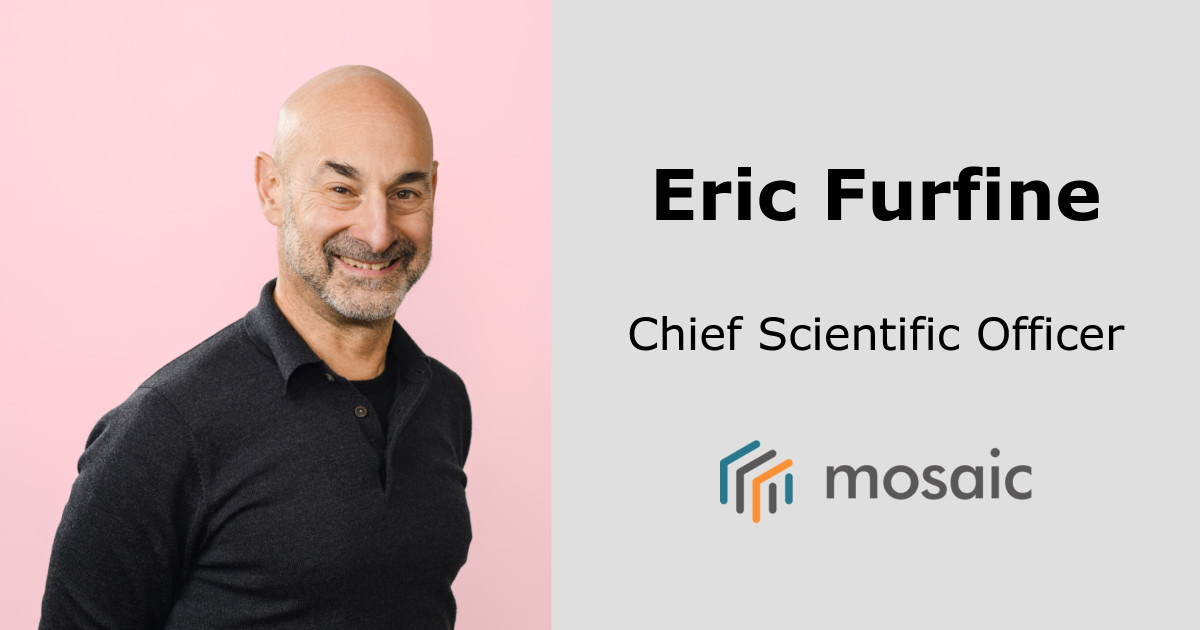
Boulder, Colorado-based Mosaic Biosciences is a private protein and antibody discovery company that works with biopharma partners to help them find and engineer next-generation biologics.
In my interview with Dr. Eric Furfine, Mosaic Biosciences' CSO and formerly a research leader at Adnexus and Eleven Biotherapeutics, we discuss the decisions that make or break an antibody discovery program: defining the product profile early, matching the discovery platform to the biology, judging developability risk without discarding candidates too soon, and telling a true discovery partner apart from a data provider.
Pharma keeps outsourcing more of its R&D. About half of global clinical development spending already flows through CROs, and according to some reports, like one by Bourne Partners, the share could reach roughly 70% in the long term. What is changing is what sponsors are buying, and our latest deep dive, How AI, Geopolitics and Novel Regulations Reshape the R&D Outsourcing Industry, looks at the three forces behind that shift.
The first change is AI. Agents can now take on monitoring, data management, statistics, medical writing, regulatory paperwork, and other things- work that CROs have traditionally billed by the hour. In order to stay competitive, CROs proactively adopt new technologies and shift business models.
For instance, IQVIA recently deployed more than 400 agents across clinical and commercial workflows. In the short term, the advent of AI/agents helps CRO margins, but over the longer term it weakens hourly pricing models and pushes the industry toward milestone- and outcome-based fees.
The second is geopolitics. BIOSECURE became law in December 2025; WuXi AppTec spent five months on the Pentagon’s list before being removed this month, and Congress is pressing FDA over trial data generated in China. Meanwhile, Chinese out-licensing reached $135.7B across 157 deals in 2025, and those assets still need Western trials that meet FDA and EMA standards.
The third is preclinical regulation. For instance, FDA wants animal studies to become the exception by 2030, which helps explain why IQVIA paid about $145M for five Charles River discovery sites focused on non-animal methods.
All in all, the outsourcing checklist gets new questions: who owns the models trained on a sponsor’s trial data, and will a regulator still accept that data in, say, three years?
Open models at commercial scale — London-based Boltz raised a $110M Series A led by Bessemer Venture Partners, and says usage of its AI drug design software is up 50x in under a year.
Carnegie Mellon spinout Xlue raised a $35M seed led by Conviction for an AI model that predicts cancer risk from health records.
Mining old experiments — San Diego-based Tesorai raised a $5.3M seed led by Perplexity Fund to make raw proteomics data from past studies searchable.
Isomorphic adds Merck — Merck signed a research collaboration with Isomorphic Labs on an undisclosed oncology target, days after Isomorphic’s $5B Series C; the amounts were not disclosed.
Trial data meets real-world data — nference partnered with Novo Nordisk to combine Novo’s trial data with its health-data network in cardiometabolic disease; no terms were disclosed.
For decades, young biotechs announced new drug ideas at meetings, in preprints and on their websites, because visibility attracted investors and partners. The New York Times reports that might be changing. Founders and investors, including Curie co-founder Alexis Borisy, fear that well-funded Chinese companies will pick up a published target and reach the clinic faster and cheaper. Some also worry that China could eventually use access to drugs as leverage.
This isn’t the first sign. The WSJ described the same shift in July, and Fierce Biotech reported longer stealth periods, earlier patent filings, and even deliberate misdirection.
The other side is on Bruce Booth’s LifeSciVC, where HotSpot CEO Jonathan Montagu wrote in March about the risks and rewards of developing drugs in China. Booth himself still lists China, along with AI, as a possible lever on R&D productivity.
According to Ashu Singhal, Co-founder & President of Benchling, the next edge in AI will come from a company’s own experimental history
Time will tell, but Singhal’s new post makes a point I agree with: papers show the protocol that worked, not the failed attempts, which live in companies’ lab notebooks. On Benchling’s own wet-lab troubleshooting benchmark, a post-trained Kimi K3 scored 71.8%, versus 60.5% for the strongest frontier model. Singhal puts the bottleneck in building good training tasks, and if public data gets thinner, private records become even more valuable.
According to Vas Narasimhan, CEO of Novartis, AI will take years off drug development, but won’t cure cancer within a decade
In the Financial Times, Narasimhan, who also sits on Anthropic’s board, argued that we understand only about 5% of what happens in the human body. He still expects AI to cut average development time from about 12 years to 8, and to lift first-in-human success rates from 8% to 12%. That’s a 50% relative improvement, which wouldn’t cure cancer but would change the economics of R&D a lot.
According to Tony Wood, Chief Scientific Officer at GSK, Anthropic is “another competitor”
Wood told Reuters as much, even though drugmakers use Claude, and Anthropic has acquired Mithril Medicine with two rare muscular dystrophy programmes. Pharma draws the line at data: Novo Nordisk and Sanofi’s representatives say they don’t give proprietary data to frontier labs for training, and Novartis points to more than 150 petabytes of its own.
Members get the full access to every deep dive plus our complete archive. Become a member →
Loading...
That was last week, and have a great one ahead!
Forward this to a colleague who should be tracking this space,