


Welcome to the Where Tech Meets Bio newsletter, where we explore companies, technologies, and scientific breakthroughs shaping the biopharma industry's future!
If this newsletter is in your inbox, it’s because you subscribed, or someone thought you might enjoy it. In either case, you can subscribe directly by clicking this button:
In this issue: Warp Sciences raises $215M to bring medicinal chemistry back onshore with chemists and robots — Pfizer deploys Edison's Kosmos across its R&D — Singapore's 450K-genome program goes dual-vendor — Formation Bio's $600M fund for stranded drugs — Hugging Face's Carbon-X reads DNA in plain English — China now hosts 45% of new drug trial starts, and more…

This issue is presented by: Molport

Molport brings together over 6 million in-stock screening compounds and building blocks from vetted suppliers worldwide, complemented by focused compound libraries tailored to specific research needs.
Explore chemical diversity, select individual compounds or customized sets, and simplify sourcing for your next screening or medicinal chemistry project.
Explore Molport’s compound catalog —>
Main Story
Much of the hands-on chemistry behind drug discovery, meaning the hundreds of small variations chemists make to tune a promising molecule, has long been outsourced to lower-cost labs overseas such as WuXi AppTec.
Warp Sciences, led by former OpenAI VP of Science Kevin Weil, wants to bring that work back to the US. It came out of stealth with $215M led by Lightspeed, at an $865M valuation, to run a US chemistry CRO that pairs experienced chemists with AI and robots, charging per compound delivered instead of per chemist-hour. The chemists come first, and their work becomes the data that gradually automates it.
The open question is whether the robots can be kept busy enough, and messy real-world chemistry tamed enough, to match offshore prices. C&EN explores the case, read the full piece.
The Brief
💰 Follow the Money
Buying stranded drugs, not companies — New York-based Formation Bio launched a $600M Drug Development Accelerator Fund to acquire or in-license 10–15 Phase 1–2 programs over 3–5 years. Each program sits in its own entity and runs on Formation’s AI-native development platform.
Basel-based Atlas Bio launched from stealth with a $10M seed led by Creandum, bringing total funding to $12.5M. Its foundation model, trained on ~2M human RNA readouts, simulates drug response across a virtual patient cohort.
Robots for the AI wet lab — New York-based Opentrons raised a $40M Series E led by Avego, with BroadOak Capital Partners, to expand its lab robotics, software and data infrastructure for AI-driven experiments. The company says it has 11,000+ robots deployed in 80+ countries.
🤝 Deals & Alliances
Edison Scientific will deploy its AI platform and Kosmos across Pfizer’s R&D, with access to Pfizer’s proprietary oncology, internal medicine and immunology data. No financial terms were disclosed.
10x Genomics launched Sentira Single Cell, a Claude-powered cloud agent that turns natural-language questions about Chromium data into reproducible analysis notebooks. Pricing is consumption-based, about 60 credits for a full analysis according to GEN
UCB tapped Cradle to work on up to three antibody programs, in a partnership that could eventually extend across its pipeline; no value was disclosed.
Singapore goes dual-vendor — Phase III of Singapore’s national genome program (400,000–450,000 more people) is split between Illumina and a Lucence-led consortium using Ultima’s UG200, with QIAGEN on sample prep. As Alex Dickinson noted, national population programs have been Illumina-only turf since the start of NGS.
Cell biology meets molecule design — Dutch QurieGen and Rayca Precision partnered to feed QurieGen’s time-resolved single-cell multi-omics into Rayca’s AI-plus-physics molecular design.
🔬 Science to Watch
Chatting with DNA — Hugging Face released Carbon-X, an open 14.8B model that reads DNA and English together and explains, for example, whether a mutation is likely harmful.
Parse Biosciences and Nomic Bio announced Cascade, a licensable dataset that will pair 100M single-cell RNA profiles with 11,000+ secreted-protein profiles across 150,000+ cytokine and drug perturbations. GSK, Pfizer, Sanofi, Graph Therapeutics and Turbine are founding partners.
The WashU-founded consortium C-BRAIN is building open Alzheimer’s models that learn directly from human brain data, and is exploring with NVIDIA how BioNeMo and MONAI could help train them.
We are happy to announce that our media partner, analytica Vietnam 2027, officially returns to Ho Chi Minh City!
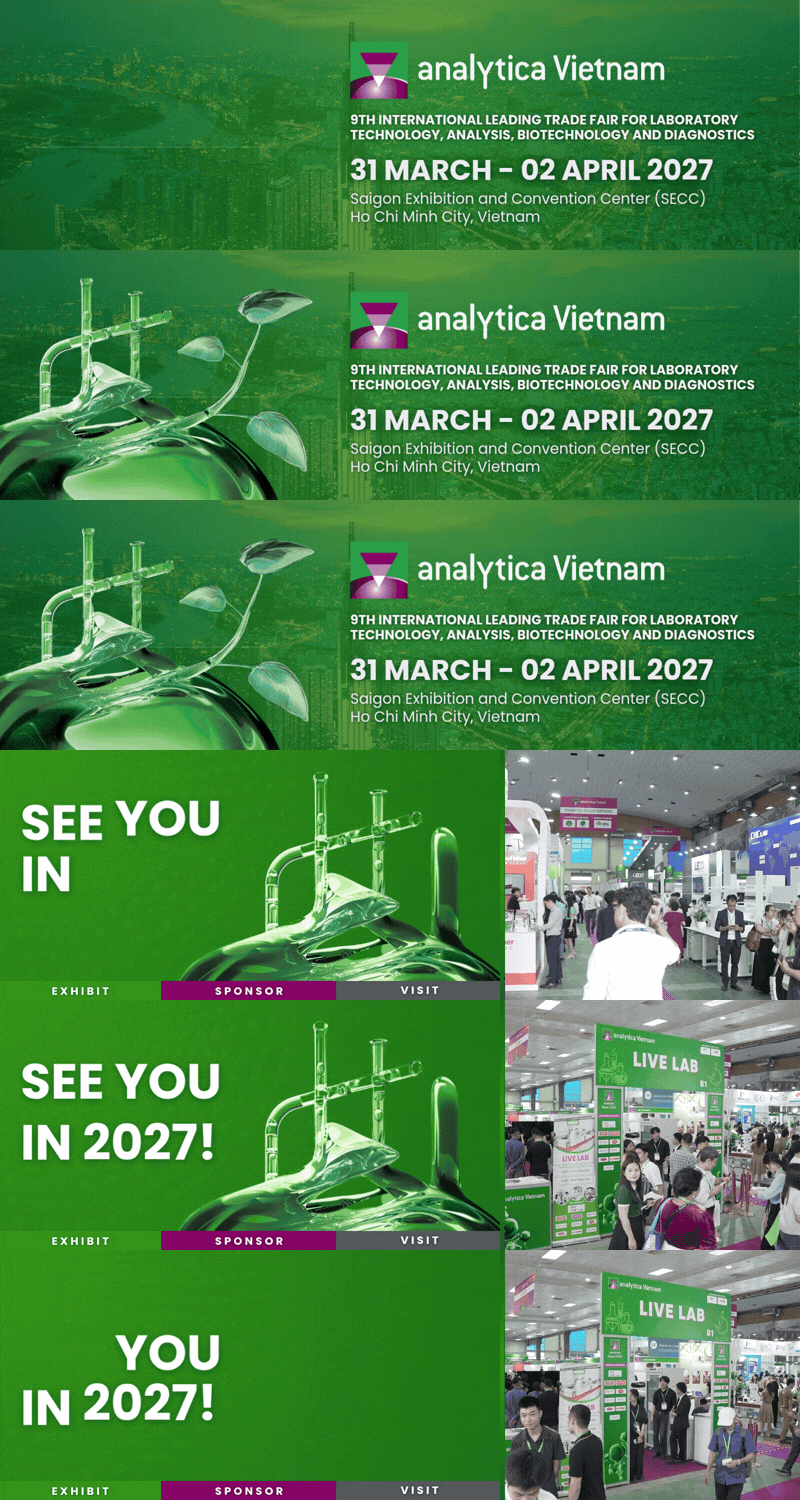
We are pleased to announce the 9th edition of analytica Vietnam, taking place from 31 March to 2 April 2027 at the Saigon Exhibition and Convention Center (SECC), Ho Chi Minh City.
Part of the internationally renowned analytica brand led by Messe München, analytica Vietnam continues to serve as the region’s most established platform connecting global technology providers with Vietnam’s fast-growing laboratory and life sciences markets.
Why analytica Vietnam 2027
Vietnam’s largest and ASEAN’s leading exhibition for laboratory and life sciences industries
Live Lab – ASEAN’s only interactive laboratory experience, offering hands-on demonstrations and real-time innovation insights
Expanded international pavilions showcasing global technologies and solutions
Biotechnology Pavilion - a first in Vietnam, we aim to bring together industry leaders, researchers and decision-makers from across southeast Asia fostering a vibrant environment for collaboration, discovery, and growth.
High-level Supporting Programme – conferences, exhibitor forums, workshop and tutorials
Curated networking connecting manufacturers, distributors, laboratories, research institutions, and policymakers
Building on the strong momentum and record growth of recent editions, analytica Vietnam 2027 reinforces its role as a unique, hands-on platform for knowledge exchange, technology transfer, and business development across Southeast Asia.
Event Date: 31 March – 2 April 2027. Location: Hall A1 & A2 - Saigon Exhibition & Convention Center (SECC). Ho Chi Minh City, Vietnam
For exhibition or participation enquiries, please contact:
Email: analyticavietnam@mmiasia.com.sg
Whatsapp sms/call: +65 8712 3652 (Singapore)
A Thing To Know This Week
Aging is the biggest risk factor for chronic disease, but regulators don’t recognize it as a disease. That means no formal indication, no accepted endpoints, and little reason for investors to fund “anti-aging” directly. There are three big ideas in aging research that could shift the therapeutic landscape anyway…
The first is GLP-1s as a possible first longevity drug class. Lilly’s Andrew Adams argued that their benefits across many organ systems, from cutting progression from prediabetes to diabetes by up to 94% to lowering cardiovascular events, already delay age-related disease, while stopping short of claiming they slow aging itself.
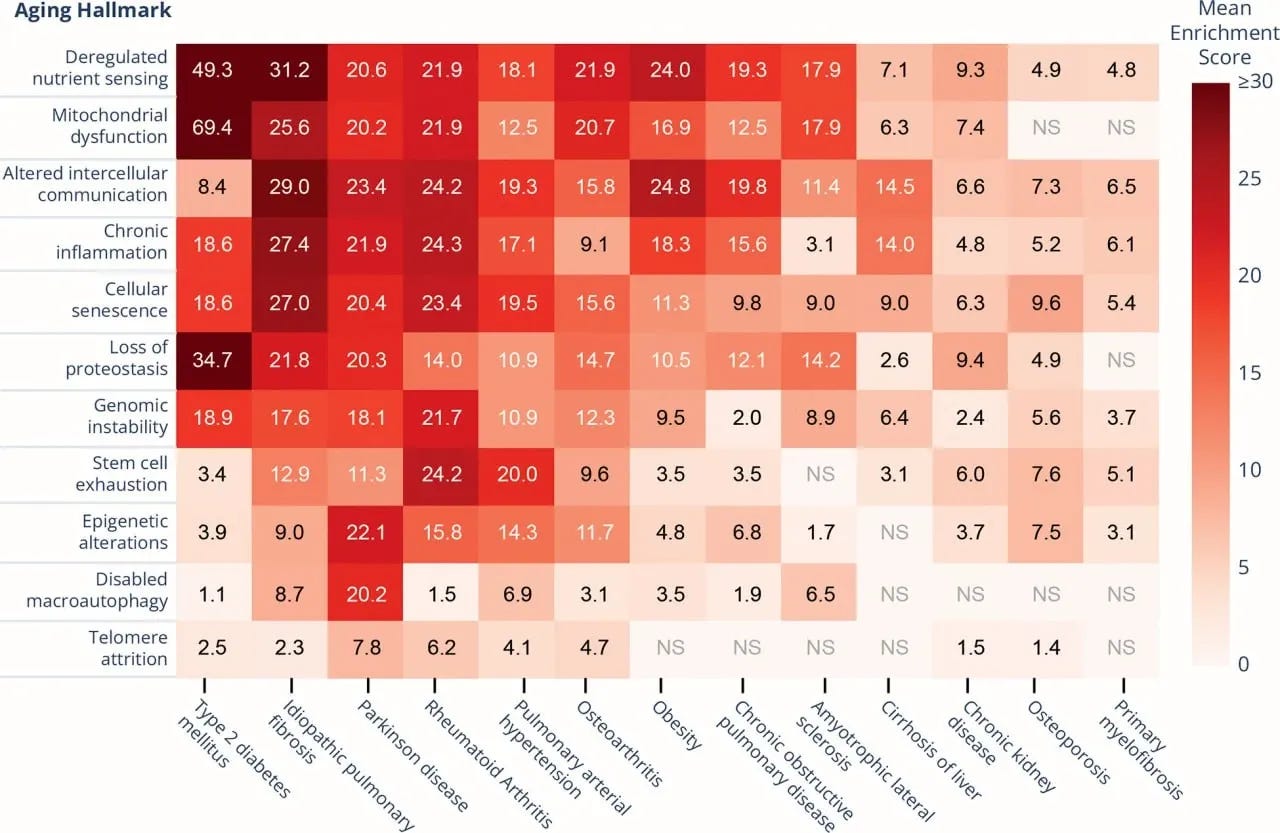
The second is proxy diseases. Dr. Zhavoronkov of Insilico Medicine and colleagues scored 13 diseases against the hallmarks of aging, and idiopathic pulmonary fibrosis came out on top. It progresses quickly and has well-defined endpoints, and Insilico’s TNIK inhibitor rentosertib is being developed for it.
The third is the microbiome. Scientists from Maxwell Biosciences argue that microbial imbalance speeds up aging, and they are developing stable synthetic mimics of the antimicrobial peptide LL-37 to counter it.
The full piece goes further. It covers why Novo Nordisk’s Lotte Bjerre Knudsen titled her ARDD talk “Semaglutide as a Proven Longevity Medicine,” which other geroprotectors are being tested in IPF, and why antibiotics may cut immunotherapy efficacy by up to 50%.
Read the full deep dive here: Three Big Ideas in Aging Research That Could Shift the Therapeutic Landscape
Strategic Signals…
According to a Bloomberg Big Take, China now hosts 45% of new drug trial starts, and early-stage biotech is following
At the center of the piece by Amber Tong, Ashleigh Furlong and Fabienne Kinzelmann is InGel Therapeutics, a Boston startup working on a rare genetic eye disease. It was down to its last $1M and used it to fund a trial run by a Shanghai hospital, which has so far treated six patients. One of its investors estimates the same study would have cost $10–20M in the US.
The numbers behind the anecdote: China’s share of new innovative-drug trial starts went from under 5% in 2008 to 45% in 2025, according to Norstella data compiled with Bloomberg. Recruitment there runs two to five times faster, and costs are a fraction of Western levels.
🧬 What’s different now is who is going and why. China used to be where Western pharma licensed assets or added sites to late-stage trials. Increasingly, it’s where you get first human data, the go/no-go evidence that decides whether a seed-stage company can raise its next round. That changes what is fundable at the earliest stage.
Time will tell how durable this is. The piece itself raises safety and transparency concerns, US lawmakers are questioning how the FDA treats data from uninspected Chinese sites, and early results still have to hold up in multiregional trials.
That was last week, and have a great one ahead!
Forward this to a colleague who should be tracking this space,
Cheers!
— Andrii and WTMB Team!
Read also:
Biotech IPOs Roar Back, With Nvidia-Backed Iambic Next in Line🔒
The $2.7B Question: How Do We Know If Isomorphic’s AI Works?
Big Pharma Is Betting On LLMs and Agents. What Would Count As Success?