


Welcome to the Where Tech Meets Bio newsletter, where we explore companies, technologies, and scientific breakthroughs shaping the biopharma industry's future!
If this newsletter is in your inbox, it’s because you subscribed, or someone thought you might enjoy it. In either case, you can subscribe directly by clicking this button:
In this issue: pharma signs enterprise LLM deals at scale but it's unclear what would count as success — Iambic files for Nasdaq while Orbis lands Novo Nordisk for up to $1.4B — Mayo and Thermo Fisher start a million-biospecimen omics venture — Stanford turns papers into agents that talk to each other — the brain turns out to have grown from two separate roots all along, and more…
Main Story
Earlier this year, Bristol Myers Squibb put Claude in front of more than 30,000 employees, with a stated goal of halving the time from target selection to lead molecule.
Novo Nordisk's new Anthropic deal is the latest in the same trend. Besides, there is Merck that has committed up to $1 billion to Google Cloud, deploying Gemini Enterprise across R&D, manufacturing, and commercial. Amgen deployed ChatGPT Enterprise. Novo itself already had an OpenAI partnership from the spring... the list goes on.
Over the weekend, I finally completed my editorial article, Big Pharma Is Betting On LLMs and Agents. What Would Count As Success?, exploring this trend. The deals of this type carry two quite different value propositions, and the return on each needs quite different ways to measure.
One is the operational aspect: software engineering, regulatory and medical writing, knowledge retrieval, financial planning, etc. The evidence of potential value is real, albeit somewhat mixed, according to several studies outside pharma.
The other aspect is scientific reasoning, and it is probably harder to measure. While there are different studies and benchmarks, there is a notable new attempt at benchmarking, published in Cell, where authors assess the performance of several leading frontier models and their own smaller models against 17 aging biology tasks. Beyond presenting a framework for measuring AI in bio, this study also leads to a conclusion that the model size alone may not be the only key to what decides performance on biological data.
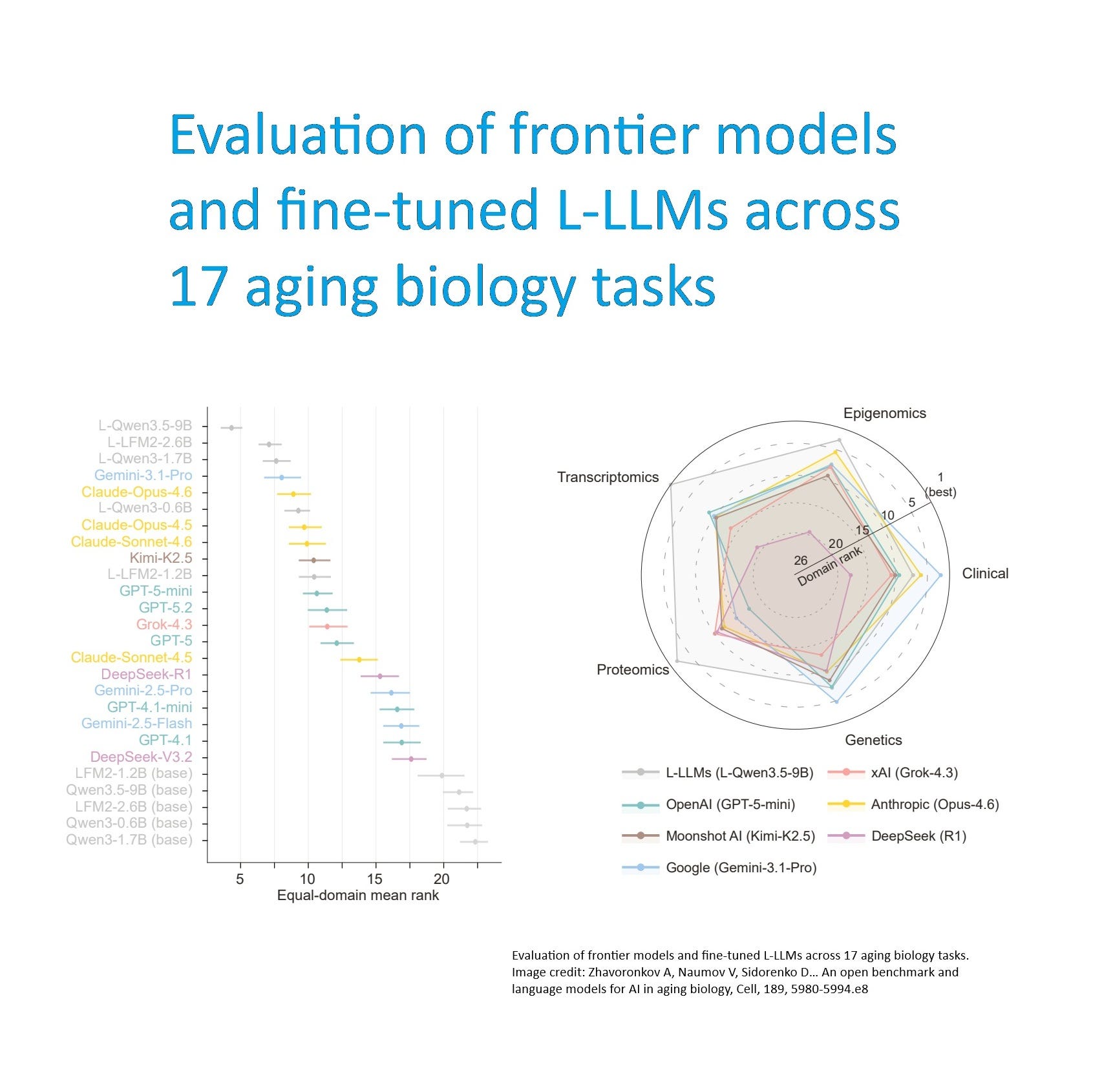
This is in line with a rapidly growing market of smaller but more specialized and more grounded AI platforms, also with LLM and agentic capabilities. Those include Schrödinger, OWKIN, Causaly, BenchSci, Insilico Medicine, Lantern Pharma, and others building on physics simulation, patient cohorts, or other curated knowledge graphs.
BenchSci, for example, makes the same argument from the demand side. Its EMET agentic environment was picked by argenx‘s scientists after their own competitive evaluation — which CEO Liran Belenzon called earning trust “at the bench, not in the boardroom”. argenx’s Tim Van Acker described it as “… a scientist in your pocket – always available, always reasoning across the evidence.”
Pharma is buying both camps, and in my article I list some deals and observations.
More important, though, is that an agentic layer on top of these tools lets people who were never trained on them take (some) part. For instance, Schrödinger‘s execs say Bunsen is for “drug hunters who are not computational chemists.”
Causaly, in its turn, is putting scientific reasoning into MS Teams for medical and commercial teams, allowing for more kinds of specialists in the same interdisciplinary work.
All in all, big pharma is increasingly betting on LLMs and agents, but the questions become more and more critical: how to assess success in a relevant way?
Read the full deep dive here: https://www.biopharmatrend.com/business-intelligence/big-pharma-is-betting-on-llms-and-agents-what-would-count-as-success/
📅 I am excited to share that I’ll be attending BIOSPAIN 2026 as guest media.
BIOSPAIN is a massive event, recognized as the largest biotechnology conference organized by a national bioindustry association in Europe and one of the largest in the world for partnering and industry collaboration.
The Brief
💰 Follow the Money
AI drug discovery goes public — San Diego-based Iambic filed for a Nasdaq IPO under "IAM," with J.P. Morgan, Jefferies, BofA Securities and Citigroup leading; share count and price are not yet set.
Proceeds go mainly to IAM1363, an oral, brain-penetrant HER2 inhibitor in Phase 1 for HER2-altered solid tumors that the company claims is the only known HER2 TKI binding the inactive DFG-out conformation, with a registrational trial targeted "as early as 2027"; IAM217 (KIF18A) and IAM-C1 (CDK2/4) follow.
The filing lands mid-rebound — after a trickle of listings in 2025, 2026 has already brought Aktis Oncology ($318M, January), Eikon Therapeutics ($381M, February), Generate:Biomedicines ($400M, the largest biotech IPO since 2024) and Kardigan ($400M upsized, June), with ADARx, TRexBio and Retension queued behind.
AI for regulatory science — Paris-based Biolevate raises €30M Series A co-led by RAISE France and Orange Ventures, with MSD Global Health Innovation Fund, STATION F, EQT Ventures & Growth and Future4care participating, to scale its AI platform that turns scientific and regulatory knowledge into auditable, evidence-grade workflows for regulated life sciences. The company reports 20x ARR growth over 12 months and 12+ enterprise customers in production, including work with Sanofi, and will open a Boston office to drive US expansion.
AI infrastructure for pharma — Mithrl raises a $20M Series A backed by Headline, AGI House and a group of pharma executives, to build custom AI infrastructure for biopharma R&D. The company is positioning at the middle layer of the AI-for-biology stack — proprietary data, biomedical world models and per-customer infrastructure that let each pharma team run frontier models on its own data and pipeline, rather than competing at the application layer.
A verification layer for AI-generated biology — New York-based Polyphron raised a $20M seed to pair an automated "Tissue Foundry" growing human micro-tissue from stem cells with a "Tissue World Model" simulation layer, testing what AI-generated therapeutic hypotheses actually do in human biology. Former Google DeepMind Gemini researcher Vinh Q. Tran joins as co-founder and Chief AI Scientist.
🤝 Deals & Alliances
Pre-symptomatic disease biology at scale — Mayo Clinic and Thermo Fisher launched Precure, LLC, a Mayo-majority JV generating multi-omics data from one million biospecimens linked to longitudinal clinical records, using Thermo Fisher's Olink Explore HT proteomics and Orbitrap mass spec. The aim is to detect molecular disease signals years before diagnosis; no deal value disclosed.
Standardized data as the entry ticket — In a new agreement, Ginkgo Datapoints will supply small molecule ADME and antibody developability testing to companies in Lilly TuneLab, Eli Lilly's federated-learning platform that lets biotechs use models trained on hundreds of thousands of Lilly molecules without either side exposing proprietary data. Uniform assay protocols should help the shared models learn faster, and new members can submit Datapoints-generated data to unlock additional benefits; no financial terms disclosed.
Oral macrocycles against injectable targets — Copenhagen-based Orbis Medicines signed a multi-target discovery and license deal with Novo Nordisk worth up to $1.4B in upfront and milestone payments plus tiered royalties, with Novo also taking an undisclosed equity stake. The collaboration will use Orbis's nGen platform, which pairs generative AI with automated chemistry, to develop orally bioavailable macrocycles for cardiometabolic targets.
🔬 Science to Watch
The brain grows from two roots, not one — Jokhai, Dundes et al. (Nature Neuroscience, Sept 18, 2026) found that the thinking part of the brain and the brainstem that runs breathing and heartbeat come from two separate groups of cells that split apart at the very start of embryo development, rather than from one common pool as textbooks assume. Knowing this, the Stanford-led team finally grew human brainstem motor neurons in a dish — the cells lost in ALS and spinal muscular atrophy, which had resisted lab-growing until now.
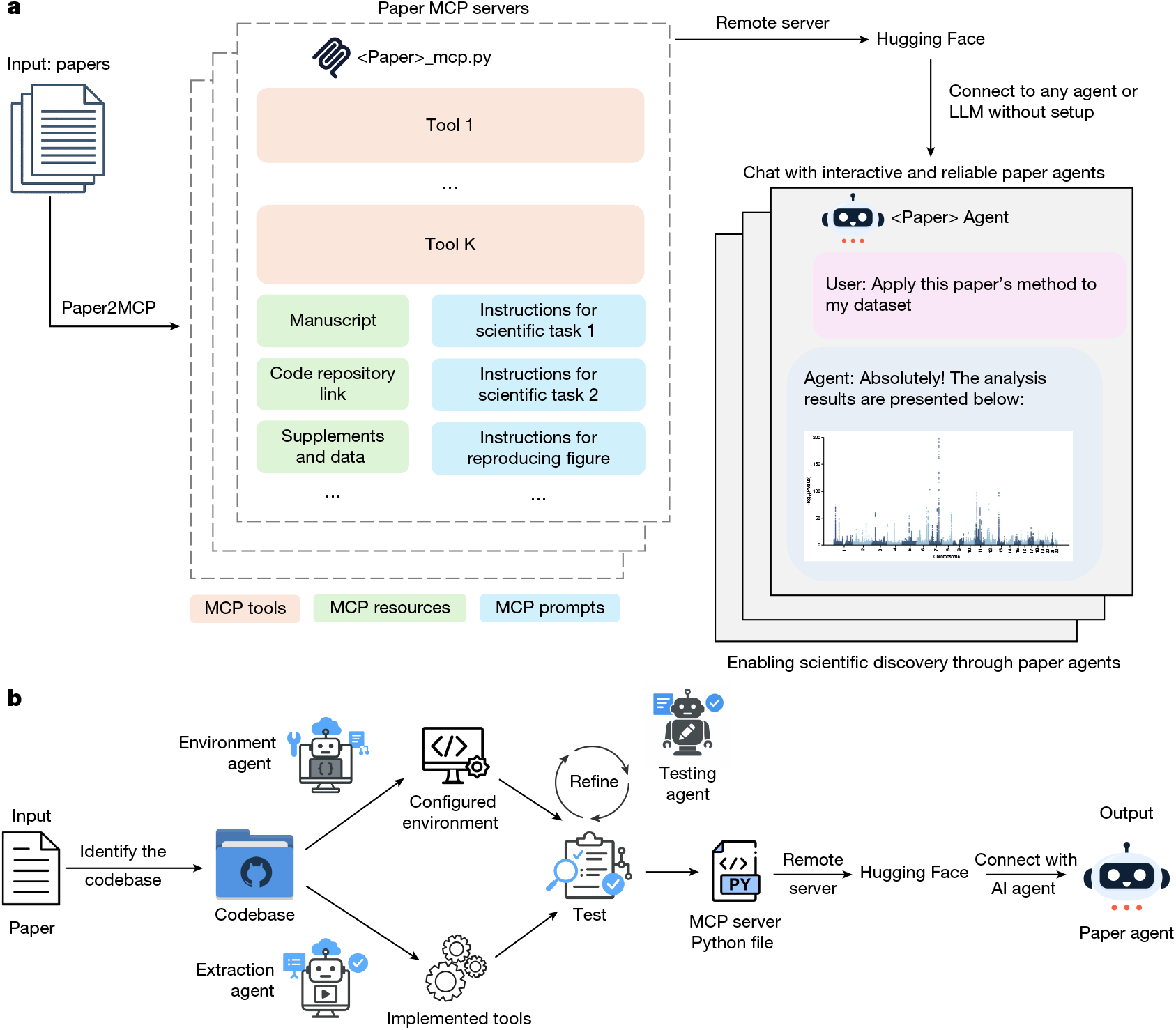
Papers that run themselves — Miao, Zou et al. (Nature, Sept 16, 2026) built Paper2Agent, which converts a manuscript's text, code and data into an MCP-based AI agent that reproduces the study and then answers questions or applies its methods to new datasets; 74 of 100 computational biology papers were successfully converted. In a paired demonstration, an AlphaGenome agent and an ADHD GWAS agent reportedly surfaced a previously unreported variant near MPHOSPH9 associated with ADHD risk.
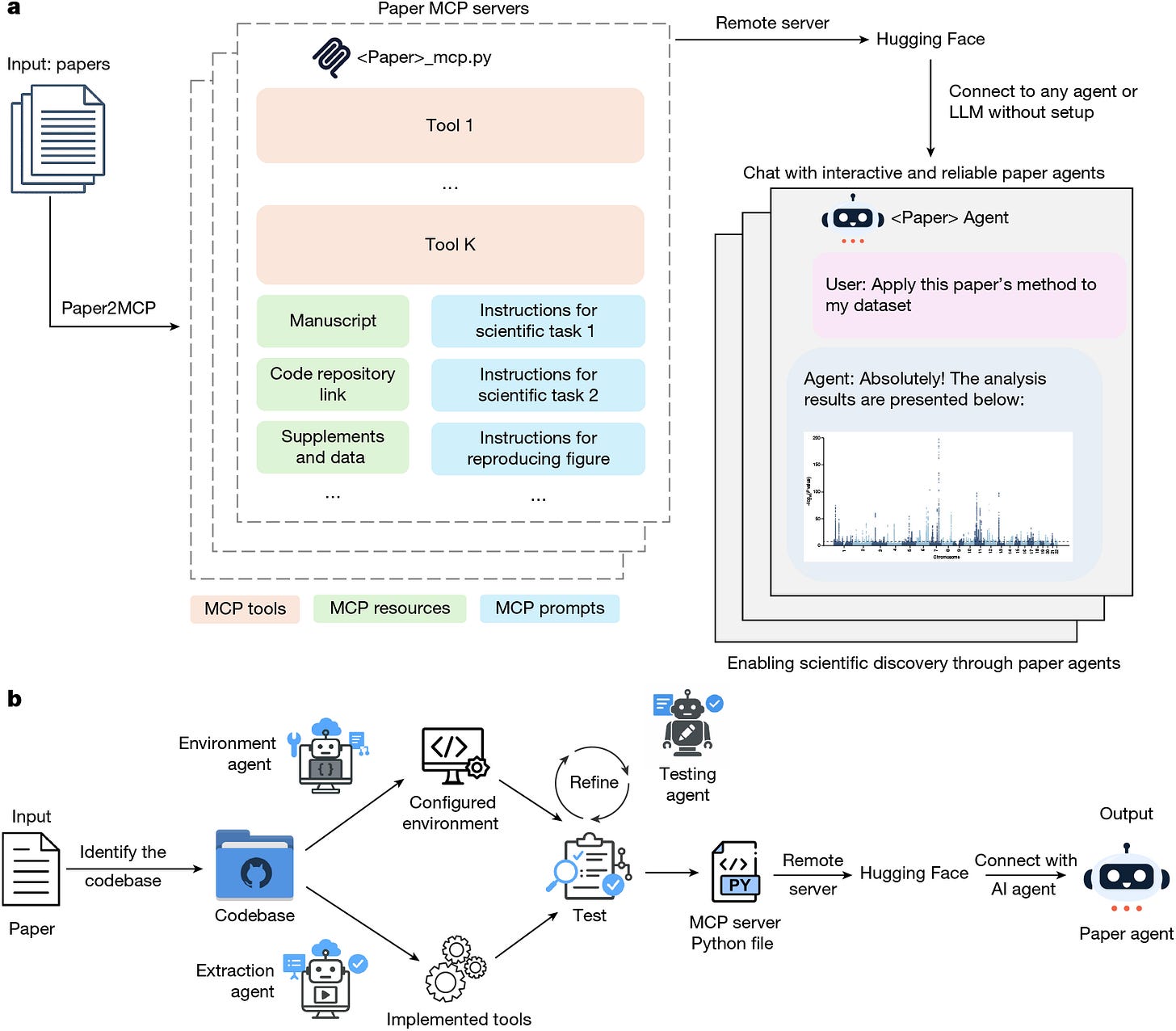
Paper2Agent turns research papers into interactive AI agents by building remote MCP servers with tools, resources and prompts. Connecting an AI agent to the server creates a paper-specific agent for diverse tasks. b, Workflow of Paper2Agent. It starts with codebase extraction and automated environment setup for reproducibility. Core analytical features are wrapped as MCP tools, then validated through iterative testing. The resulting MCP server is deployed remotely and integrated with an AI agent, enabling natural language interaction with the paper’s methods and analyses. Image credit: Miao, J., Davis, J.R., Zhang, Y. et al. Reimagining research papers as interactive and reliable AI agents. Nature (2026). https://doi.org/10.1038/s41586-026-11044-y, (CC BY-NC-ND 4.0, https://creativecommons.org/licenses/by-nc-nd/4.0/)
📋 From the Regulators
Pulling first-in-human trials back to the US — The FDA launched its Expedited IND Pilot on Sept 15 under HHS's Operation TrialBlazer, letting sponsors submit parts of an IND application as they're ready instead of waiting for the full package, with optional expert review partners and site setup running in parallel. Applications close Oct 30 and participants are picked Dec 18; the pilot prioritizes commercial INDs for novel Phase 1 trials of products with no prior clinical experience.
A second AI organ model into FDA's qualification path — Absentia Labs’ co-founder and CEO, Farhan Khodaee, says the FDA accepted its AI model for predicting drug-induced cardiotoxicity into the ISTAND pathway, which qualifies novel drug development tools that don't fit existing FDA categories. It follows the company's Digital Liver model and forms the second organ system in a planned multi-organ AI safety platform aimed at replacing some animal toxicology work.
💁♀️ People 💁
Cellular Intelligence, the rebranded Somite Therapeutics, building a universal virtual cell-signaling model to direct stem cells into therapeutic cell types, added Yann LeCun (AMI Labs, ex-Meta), Bob Langer (MIT, Moderna co-founder), Jens Nielsen (BioInnovation Institute) and Fabian Theis (Helmholtz Munich) to its Scientific Advisory Board, with Langer also joining the board as an observer.
Strategic Signals…
According to Eric Lefkofsky, Founder/CEO at Tempus AI, healthcare will likely be the biggest beneficiary of AI
Time will tell, but it seems like Tempus AI is trying to position itself as an infrastructure player in the AI-centric future of life sciences already today. From recent notable updates, for example, the company is building a research platform of 100,000 whole genomes over the next several years. The longer-term goal is 1 million.
🧬 This idea is different from big genome programs like national biobanks, because the latter mostly sample the general population. They are not typically linked to how a disease progresses or how patients respond to treatment. Tempus’s dataset, in contrast, focuses on specific diseases and ties each genome to clinical outcomes over time. So, it is likely built for AI work, including training and fine-tuning models, not just as a database resource.
Also, Tempus is arguably moving beyond targeted gene panels (tests that read only selected genes) to reading the whole genome. The data joins its existing de-identified records: clinical histories, imaging, pathology and outcomes. Researchers could use it through Tempus Lens, so they can build and test models without moving data between systems. This plays in favor of usability, which naturally increases chances of better insights.
Lefkofsky says it himself: “A large dataset is only valuable if you can turn it into insight.”
Regarding the timing, this work has started, and early data is available through an Early Adopter Program, where more members join in waves, and full availability is planned for mid-2027.

On a personal note, I recently joined Rafael Rosengarten of Genialis' Talking Precision Medicine podcast (episode #61, Sept 17) to argue that counting "AI-discovered drugs" is the wrong yardstick — candidates come out of long collaborative processes where the AI contribution can't be cleanly separated, so R&D productivity, faster killing of weak candidates and actual software adoption tell you more.
We also got into why AI became so polarizing, what stays human as information gets commoditized, and why the next era may run on patient samples, organoids and whole-system models rather than single frontier models and target-ligand reductionism.
Listen here (around 50min): https://www.genialis.com/2026/09/17/the-kodak-moment-for-drug-discovery-ai-adaptation-and-what-stays-human-tpm-podcast-61/
That was last week, and have a great one ahead!
Forward this to a colleague who should be tracking this space,
Cheers!
— Andrii and WTMB Team!
Read also:
Could Anthropic Disrupt the Techbio Companies Built for Pharma/Biotech?
What Do the New AI Model Releases by Anthropic and OpenAI Change for Life Sciences?
The Bigger Point Beyond Insilico’s Aging Research Milestone
Into the Dark: Finding Novel Drug Targets Within the Depths of Our Proteome