
Hi! I am Andrii Buvailo, and this is my weekly newsletter, ‘Where Tech Meets Bio,’ where I talk about technologies, breakthroughs, and great companies moving the biopharma industry forward.
If you've received it, then you either subscribed or someone forwarded it to you. If the latter is the case, subscribe by pressing this button:
Now, let’s get to this week’s topics!

Weekly drug discovery and biotech highlights 👇
🔬 BREAKING NEWS: Eli Lilly and its subsidiary Akouos announced positive Phase 1/2 trial results of AK-OTOF gene therapy for genetic hearing loss, showing significant hearing restoration within 30 days in participants.
The trial, presented at the Association for Research in Otolaryngology 2024 MidWinter Meeting, marks a major advancement in gene therapy for hearing loss, with AK-OTOF receiving Orphan Drug and Rare Pediatric Disease Designations from the FDA.
“Gene therapy fails more often than it seems the field sometimes wants to admit. But when it works — damn, it really works,” tweets Jason Mast, STAT News
🔬 AlphaFold identifies hundreds of thousands of new psychedelic molecules, potentially aiding antidepressant development, showcasing the tool's effectiveness in drug discovery compared to traditional experimental methods.
🚀 Tr1x, a new San Diego-based biotech, raises $75M to develop regulatory T cell (Treg) therapies for autoimmune conditions, planning to initiate multiple clinical trials later this year, focusing on graft-versus-host disease and inflammatory bowel disease.
🔬 Stuart Schreiber, co-founder of the Broad Institute, launches Arena BioWorks, a new research institution aimed at streamlining translational research from basic studies to drug development, funded by over $500 million from private financiers.
🔬 Insilico Medicine discovers novel AI-driven PHD inhibitor for anemia treatment using Chemistry42 AI platform, published in the Journal of Medicinal Chemistry.
💰 S. Korea-based Mirae Asset Capital Life Science launches a $50M US biotech fund, focusing on oncology, immunology, cardiovascular, metabolic diseases, CNS, ophthalmology, and genetic diseases, including AI and machine learning tools for drug discovery.
📈 CG Oncology sets IPO plans to raise up to $209M, focusing on advancing their bladder cancer treatment, cretostimogene.
📈 Kyverna Therapeutics, developing novel CAR-T therapeutics for autoimmune diseases with their anti-CD19 CAR-T construct, is rumored to file for an IPO soon, advancing clinical trials for lupus nephritis, myasthenia gravis, and multiple sclerosis.
💰 Myrobalan Therapeutics receives $24M in Series A funding to develop neurorestorative therapies targeting multiple sclerosis, Alzheimer’s, and other neurological conditions, focusing on G-protein receptor antagonists, colony-stimulating factor-1 inhibitors, and TYK2 inhibitors to combat neuroinflammation.
💰 S. Korean Pan Orion invests $415M in Korean biotech LegoChem Biosciences, becoming the largest shareholder. LegoChem, known for its ConjuALL technology in ADC therapies, collaborated also with J&J and Amgen, expanding Orion's foray into biopharmaceuticals.
🚀 Jaguar Gene Therapy creates Advanced Medicine Partners, a spinout specializing in manufacturing cell and gene therapies. Backed by Deerfield Management and Arch Venture Partners, the new company will support Jaguar and other biotech clients, showcasing expertise in adeno-associated virus production.
🔬 Taxes-based Enzolytics partners with Khalpey AI Lab to advance organ regeneration and longevity research, leveraging AI for aging and organ failure analysis. This collaboration aims to identify new biomarkers and therapeutic targets, focusing on multi-omic testing and AI algorithms in precision medicine.
🔬 Vivtex Corporation and AI Proteins enter a strategic R&D collaboration to develop novel, oral biologic therapies for inflammatory diseases, leveraging Vivtex’s GI-ORIS™ technology and AI Proteins’ miniprotein design to target TNFR1.
🚀 UK-based “tech-first” biotech CellVoyant has launched and raised £7.6 million in seed funding to speed up the development of novel cell therapies using AI.

Event Date: March 13, 2024 - March 14, 2024
Location: Switzerland, Congress Center, Basel;
Register: Link
Exclusive promo code for our readers: MMBT15
Announcement: We have launched a YouTube channel to provide a place for uploading and managing videos.
I will see how it goes, and I may also start a podcast here on Substack; let me know in the comments if audio format is preferred.
Here is the first videocast from the series “Where Tech Meets Bio“:
Navigating the Crossroads of AI and Oncology: A Deep Dive with Lantern Pharma's CEO, Panna Sharma

The development of oncology drugs faces significant challenges, including a high failure rate (97%) in clinical trials, due to complex genetic interactions, emerging drug resistance, and limitations in preclinical models.
Clinical trial designs often lack specificity, failing to consider genetic factors unique to cancer types, resulting in trials without biomarker integration being 12 times more likely to fail.
To address these issues, Dallas-based Lantern Pharma (NASDAQ: LTRN) utilizes the RADR® AI platform, which applies machine learning to analyze genomic and transcriptomic data, enhancing the understanding of drug mechanisms, identifying patient-specific therapeutic responses, and optimizing clinical trial designs.
In this deep dive interview, Panna Sharma, the CEO of Lantern Pharma, offers an insightful look into the company's progression in the challenging fields of cancer research, drug discovery, and the use of artificial intelligence. Sharma, with his diverse background that includes leading a cancer diagnostics company and a stint in investment banking, discusses Lantern Pharma's expansion from a small, budding team to a formidable force in the oncology sector, now managing 14 cancer indications and advancing three drugs into clinical trials.
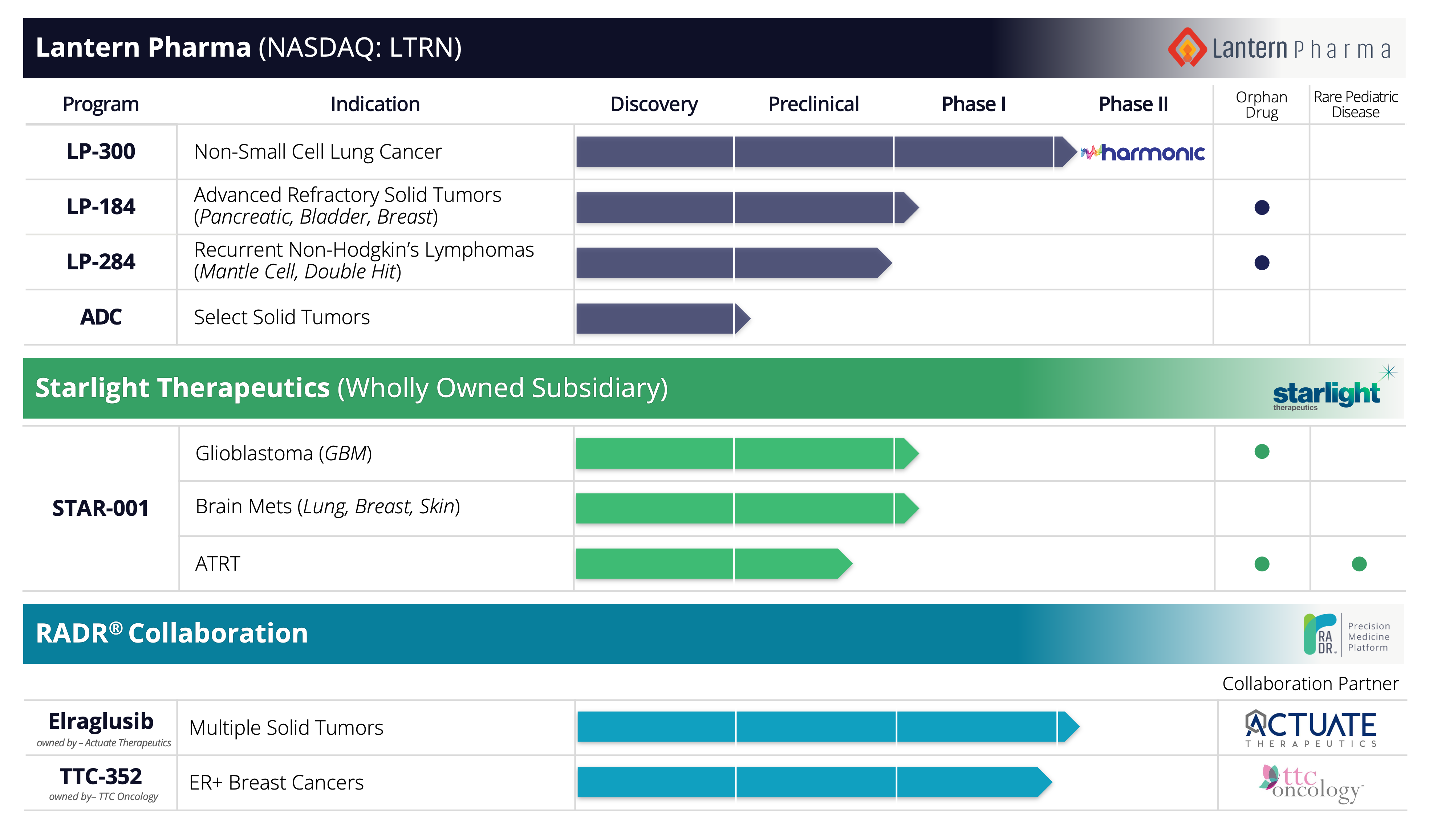
He highlights pivotal moments in his career, such as taking Cancer Genetics public in 2013 and joining Lantern Pharma in 2018, leading up to a successful public fundraising effort in mid-2020 that raised about $96 million. The conversation also ventures into the establishment of Starlight Therapeutics, focused on brain cancer research.
You can read the edited transcript of the interview here or watch it on our new YouTube channel. Below is a brief excerpt:
Advancing Anemia Treatment with AI-designed PHD Inhibitor
Hong Kong- and New York-based InSilico Medicine, a clinical-stage biotech company, has just announced the discovery of a novel Prolyl Hydroxylase Domain (PHD) inhibitor, the results of which were published in the Journal of Medicinal Chemistry.
The discovery is attributed to InSilico Medicine's proprietary generative chemistry platform, Chemistry42, featuring over 40 selected generative models. Employing Chemistry42, InSilico's researchers adopted a structure-based drug discovery (SBDD) strategy. They gathered structural data related to the PHD target and known molecules, subsequently generating a series of molecule candidates with AI assistance.
The AI-generated candidates underwent comprehensive evaluation, considering factors such as drug-likeness, pharmacophore clues, synthesis feasibility, and more. This process led to the identification of a promising hit compound, referred to as lead compound 15. Notably, this compound demonstrated favorable in vitro/in vivo ADMET profiles, a strong safety record, and promising pharmacokinetic (PK) properties across various species. Furthermore, lead compound 15 exhibited efficacy in alleviating anemia in a rat disease model, with a relatively straightforward synthesis process.
Anemia, a widespread condition often linked to chronic kidney disease (CKD), affects a substantial portion of the global population. InSilico Medicine's objective is to develop a novel noncarboxylic acid molecule with improved permeability and PK profiles, following comprehensive research into existing PHD inhibitors available in the market.
Revitalization in the Biotech IPO Arena
According to a report by BioSpace, the early months of 2024 have been highlighted as a period of revitalization for biotech IPOs. This comes as a stark contrast to the sluggish market of 2023. The report sheds light on the entry of five biotech companies into the public domain: Alto Neuroscience, ArriVent Biopharma, CG Oncology, Kyverna Therapeutics, and Metagenomi. This trend marks a significant turnaround in the biotech industry's financial landscape.
Among these, CG Oncology has been specifically noted for its promising financial outlook. The company, focusing on bladder cancer treatments, expects substantial proceeds from its IPO, with estimates suggesting a potential raise of $181.1 million. This figure could increase up to $209 million if underwriters fully exercise their over-allotment options.
BioSpace's report underscores the critical role of IPOs in the biotech sector. These public offerings are not just financial milestones but are pivotal in providing essential capital for companies to advance their technological and therapeutic innovations. The recent surge in IPOs is seen as a much-needed boost for the industry, especially after last year's downturn.
The report also touches upon predictions made by analysts at PwC regarding a potential rebound in IPO volumes starting in 2024. While PwC warned about the challenges faced by innovative startups due to the previous lack of activity in IPO markets, it also highlighted the likelihood of companies with strong clinical data going public.
This drug discovery startup hits a new high in AI docking
London-based RECEPTOR.AI recently unveiled ArtiDock v1.5, their latest advancement in AI docking software. The update expands ArtiDock's capabilities, especially in immuno-oncology.
The Receptor.AI’s computational platform was successfully validated in several projects on protein-protein interaction (PPI) targets, traditionally addressed only by antibody-based modalities.
Notably, the release of ArtiDock v1.5 aligns with the introduction of the PoseBusters v3 dataset, which challenges and evaluates AI docking technologies. The latest version of PoseBusters has become even harder for AI models.
When presented with the PoseBusters v3 challenge, ArtiDock v1.5 stands out, showing improvements over its previous version and competing technologies. The AI ArtiDock v1.5 excels when tested against the PoseBusters dataset's diverse structural metrics.
These studies highlight ArtiDock’s effectiveness across various levels of precision, as indicated by different RMSD cutoffs.
ArtiDock v1.5's inference speed is a standout feature, matching other leading deep learning models while delivering accurate results efficiently. For instance, ArtiDock 1.5 is one order of magnitude faster than Glide, Alpha Fold-Latest and two orders of magnitude faster than Vina and Gold, which makes it preferable for high-throughput screening applications. In general, ArtiDock outperforms all existing techniques in terms of throughput and pose quality.
Receptor.AI informed me that NVIDIA BioNeMo, a leading cloud service in drug discovery, is set to include ArtiDock v1.5 in its suite of tools. This integration would position ArtiDock v1.5 alongside notable offerings from DeepMind and MIT, marking it as one of the first commercial AI models to be featured on the BioNeMo platform.
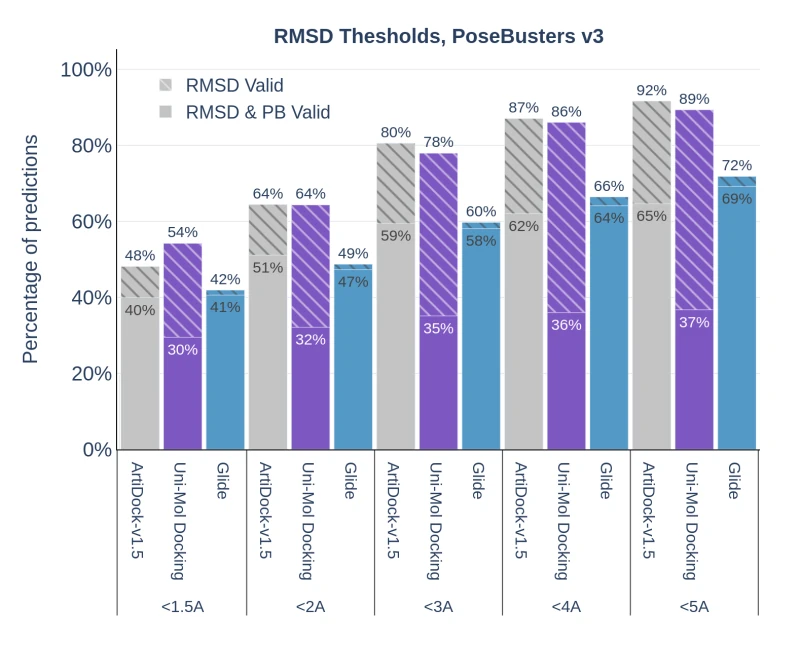
Check out a technical case study demonstrating ArtiDock’s performance benchmark vs. leading docking technologies (link in the comments).
Biologics are forecast to have $120 billion more sales than small molecules by 2027, according to a 2023 GlobalData report
Some key insights from the report:
- Biologics are anticipated to represent 55% of all innovative drug sales by 2027.
- Sales growth for biologics is supported by new drug approvals and manufacturing shifts towards these therapies.
- Monoclonal antibodies, like Opdivo, Dupixent, and Keytruda, are major contributors to biologic sales, expected to account for 46% of such sales in 2027.
- Keytruda is projected to represent 4% of all biologics sales in 2027, marketed for various cancer treatments.
- Gene therapies and gene-modified cell therapies are expected to see an increase in sales of over 1,000% from 2022 to 2027.
- Sales for gene therapies are currently driven by pipeline therapies in development, such as RPA-501 by Rocket Pharmaceuticals, which is in Phase I of clinical trials.
Quentin Horgan identifies biologics as key drivers of value in the pharmaceutical industry.